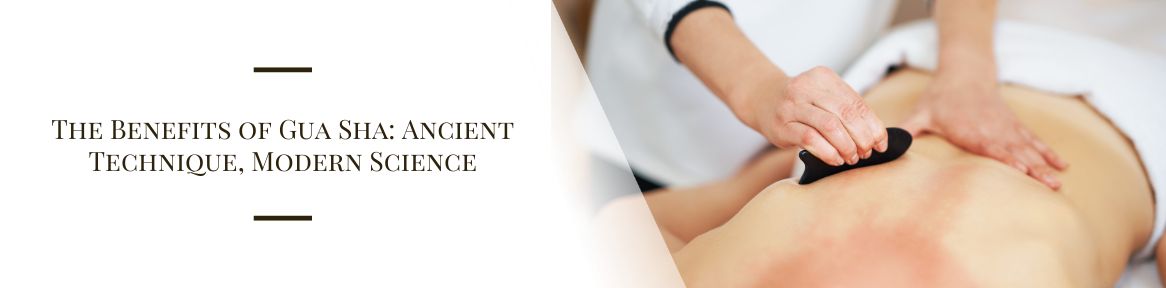
For centuries, practitioners of Traditional Chinese Medicine (TCM) have used Gua Sha to promote healing, circulation, and balance in the body. Think of it as a scraping therapy performed with a smooth-edged tool. Today, it has evolved from a full-body therapeutic practice into a global wellness and skincare ritual used by acupuncturists, massage therapists, estheticians, athletes, and everyday consumers.
But beyond the viral beauty videos and jade tools lies a growing body of research exploring what Gua Sha does physiologically. Surprisingly, many of its claimed benefits like pain relief, improved circulation, reduced inflammation, and lymphatic movement, now have measurable biological explanations.
Let’s break down the science-supported benefits of Gua Sha, how it works in the body, and why both medical and aesthetic professionals continue to adopt it.
What Is Gua Sha?
“Gua” means to scrape and “Sha” refers to the temporary redness (petechiae) that appears on the skin after treatment. The practitioner glides a smooth tool across lubricated skin using repeated strokes along muscles or meridians.
Historically, Gua Sha was used on the body for illness and pain. Facial Gua Sha is simply a gentler adaptation of the same therapy. Modern research suggests the technique triggers multiple physiological systems simultaneously. These include:
- Microcirculation
- Fascia and connective tissue
- Lymphatic drainage
- Immune response
- Nervous system modulation
Rather than being just a massage, Gua Sha functions more like a mechanical signaling therapy; the skin stimulation causes downstream biological effects.
Dramatically Improves Microcirculation (Blood Flow)
The most well-documented benefit of Gua Sha is increased local circulation. A landmark pilot study found that Gua Sha produced a fourfold increase in microcirculation in treated tissue immediately after treatment.
This matters because microcirculation governs oxygen delivery, nutrient transport, cellular repair, and waste removal. Researchers concluded that the improved circulation likely contributes to reductions in muscle pain and healing responses.
Circulation matters for skin and muscle because better blood flow means:
- Faster muscle recovery
- Reduced soreness
- Improved mobility
- Brighter complexion
- Improved nutrient delivery
- Healthier tissue metabolism
Clinically, Gua Sha has been shown to improve blood flow in small vessels and stimulate healing processes in the treated area.
Reduces Muscle Pain and Tension
One of the primary traditional uses of Gua Sha was musculoskeletal pain, and modern research supports it. Clinical observations show immediate decreases in myalgia (muscle pain) following treatment.
A systematic review of controlled trials found Gua Sha effective for managing musculoskeletal pain conditions. Additional studies suggest it may provide longer-lasting relief for chronic low back pain compared to heat therapy.
Mechanisms behind pain relief include:
- Circulation increases tissue oxygenation.
- Nervous system counter-stimulation reduces pain signaling.
- Fascial adhesions loosen.
- Anti-inflammatory chemicals are released.
Collectively these explain why many patients feel immediate relief.
Releases Fascial Restriction and Improves Mobility
Gua Sha is increasingly studied as a fascia-modulating therapy. Recent research suggests it may improve flexibility by releasing fascial tension and improving blood flow within connective tissue.
This is significant because fascia dysfunction contributes to:
- Chronic pain
- Reduced range of motion
- Postural issues
- Athletic performance limitations
Unlike deep tissue massage, the scraping motion creates shear forces that mechanically stimulate connective tissue layers; a type of myofascial mobilization.
Reduces Inflammation and Activates the Immune Response
The visible redness after Gua Sha is not damage, but rather a controlled inflammatory signal.
Studies show scraping stimulates release of protective enzymes and anti-inflammatory responses.
The treatment can trigger immune and healing pathways that:
- Reduce swelling
- Promote repair
- Support detoxification processes
Researchers note that the petechiae formed during treatment activate an anti-inflammatory immune response.
Enhances Lymphatic Drainage and Reduces Puffiness
Facial Gua Sha has become popular primarily for its visible sculpting effects. Slow strokes guide lymph fluid toward drainage pathways, helping remove excess fluid. This explains why users often notice reduced facial puffiness, jawline definition, and eye de-swelling.
Medical sources confirm improved circulation and reduced puffiness with regular use. Important note: The sculpting effect is temporary because it reflects fluid movement, not structural change but repeated sessions help maintain results.
Improves Skin Quality and Appearance
Beyond depuffing, Gua Sha may improve skin physiology. Proposed benefits include improved elasticity, reduced muscle tension, increased glow, and enhanced nutrient delivery. Clinical dermatology reports show Gua Sha increases microcirculation and reduces muscle tension in facial tissue. Other literature reviews report improvements in wrinkles, inflammation, and circulation.
Supports Relaxation and Nervous System Balance
Gua Sha also works neurologically. The scraping stimulation activates sensory nerves and can reduce stress responses. Research suggests the therapy helps relieve stress-related symptoms and promotes relaxation.
Users commonly report reduced anxiety, better sleep, and improved mood. Some clinical observations even show improved sleep quality and emotional well-being after treatment.
May Aid Recovery and Athletic Performance
Because it improves circulation, fascia mobility, and inflammation, Gua Sha is increasingly used in sports medicine. Research notes it may help injury recovery, mobility improvement, and performance enhancement. Athletes often use it similarly to instrument-assisted soft tissue mobilization.
How Often Should It Be Used?
Typical recommendations:
- Body therapy: 1–2× weekly
- Facial therapy: 3–5× weekly or gentle daily use
Consistency matters — most cosmetic improvements occur over several weeks.
Safety Considerations
Gua Sha is generally safe when performed correctly, but avoid it if skin is broken or infected, you have bleeding disorders, or you recently had injectables or surgery. Temporary redness is expected and usually fades within days.
Gua Sha is no longer just an ancient ritual but a mechanically driven therapy with measurable physiological effects.
Research-supported benefits include:
- Increased microcirculation
- Pain reduction
- Fascial release
- Reduced inflammation
- Lymphatic drainage
- Improved skin appearance
- Relaxation and stress reduction
Its unique value lies in activating multiple healing systems simultaneously: circulatory, neurological, immune, and connective tissue. In other words, Gua Sha works not because of tradition alone, but because the body responds predictably to mechanical stimulation. And that’s why this thousands-year-old therapy continues to find a place in modern medicine, aesthetics, rehabilitation, and wellness.

